
1. Switch the Camel (Briefly) for a Buggy
Camels are magnificent. Stoic, patient, faintly judgemental. They have been crossing the Sahara for centuries and see no reason to hurry now.
You should absolutely ride one.
And then — briefly — switch.
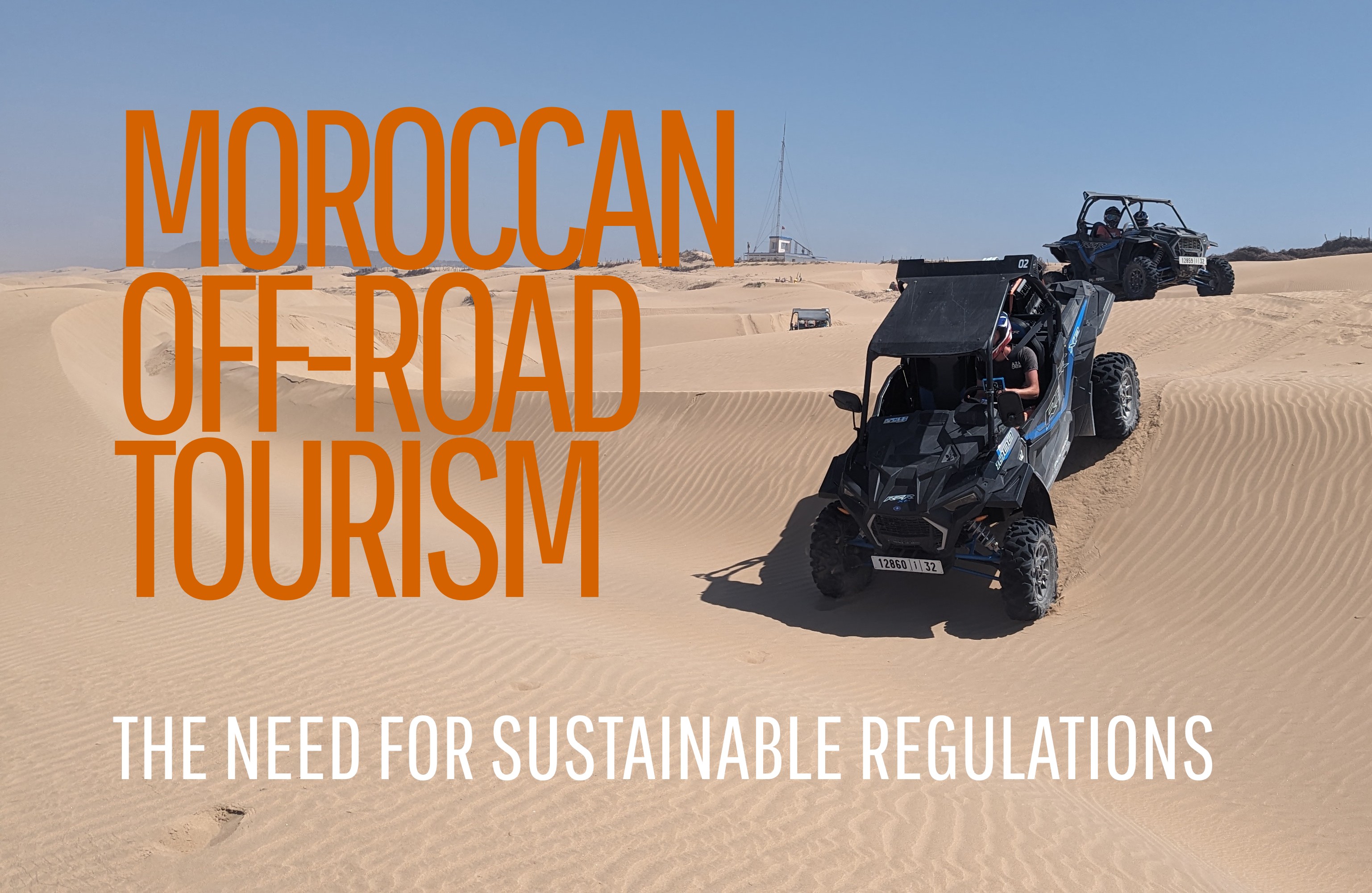
Because there is something quietly transformative about taking control of your own line across the dunes. A camel determines the rhythm. A buggy lets you determine the horizon. The difference is subtle but profound.
It isn’t about speed, or noise, or modernity muscling its way into tradition. It’s about participation. About choosing the curve of a dune rather than swaying politely over it.
Ride the camel for the poetry.
Switch to the buggy for the punctuation.
Both are unforgettable. One simply involves steering.
2. Take a Buggy Where Dinosaurs Once Walked
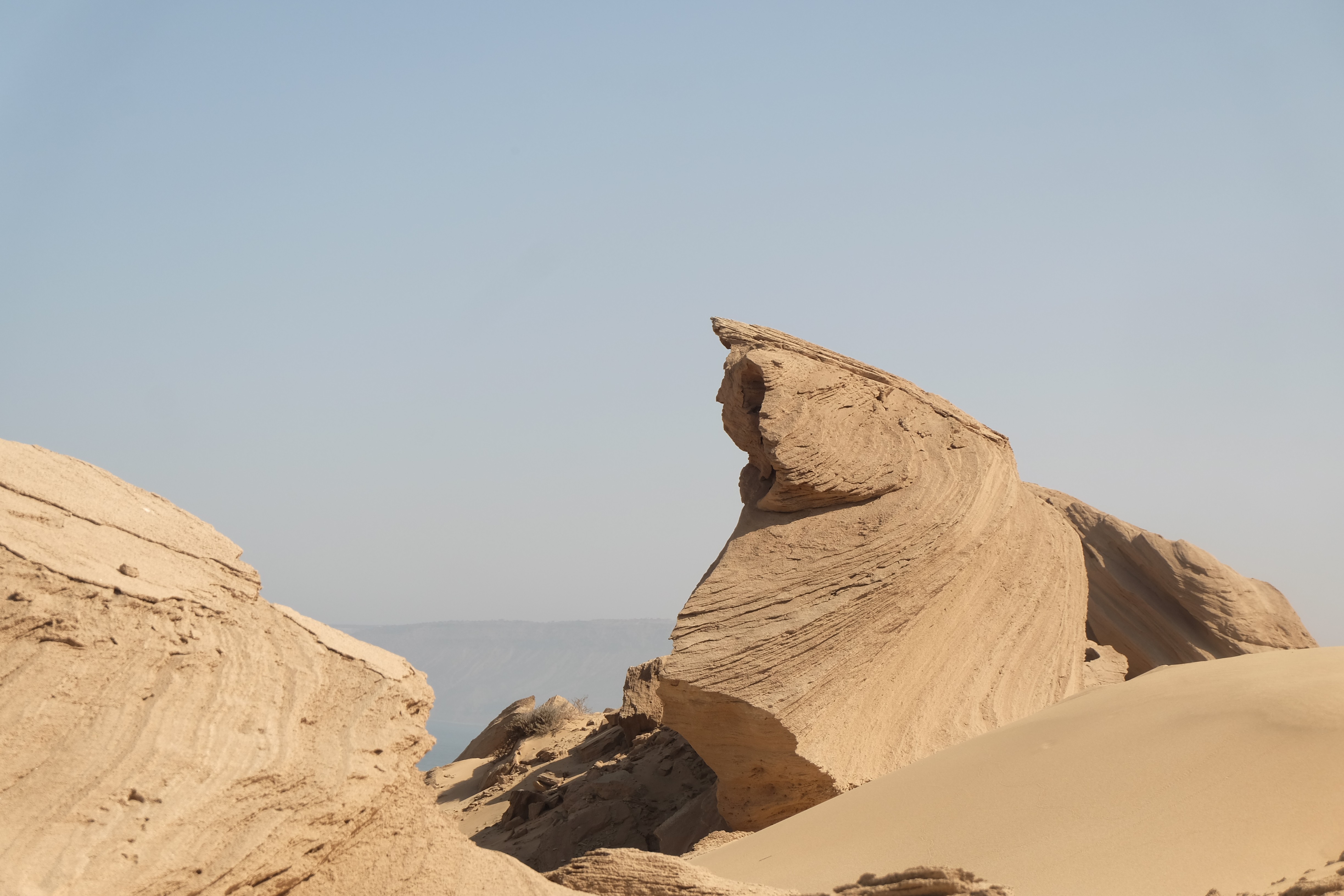
Morocco is occasionally so ancient it feels theatrical. Vast plateaus, fossil beds, imprints in stone that predate the concept of “travel” entirely.
Driving across prehistoric ground does something to your sense of scale. You are no longer the protagonist. You are, at best, a passing footnote.
And that is strangely liberating.
A buggy humming over terrain shaped millions of years ago feels less like adventure and more like perspective. The rocks do not care that you are here. The fossils are unimpressed by your suspension system.
You cross the landscape not to conquer it, but to notice it.
It is difficult to feel overly important when the ground beneath you remembers dinosaurs.
Which, in fairness, is a rather healthy recalibration.
3. Eat Tagine on a Buggy’s Bonnet
Tagine is not fast food. It is patience in edible form. Slow-cooked, fragrant, generous.
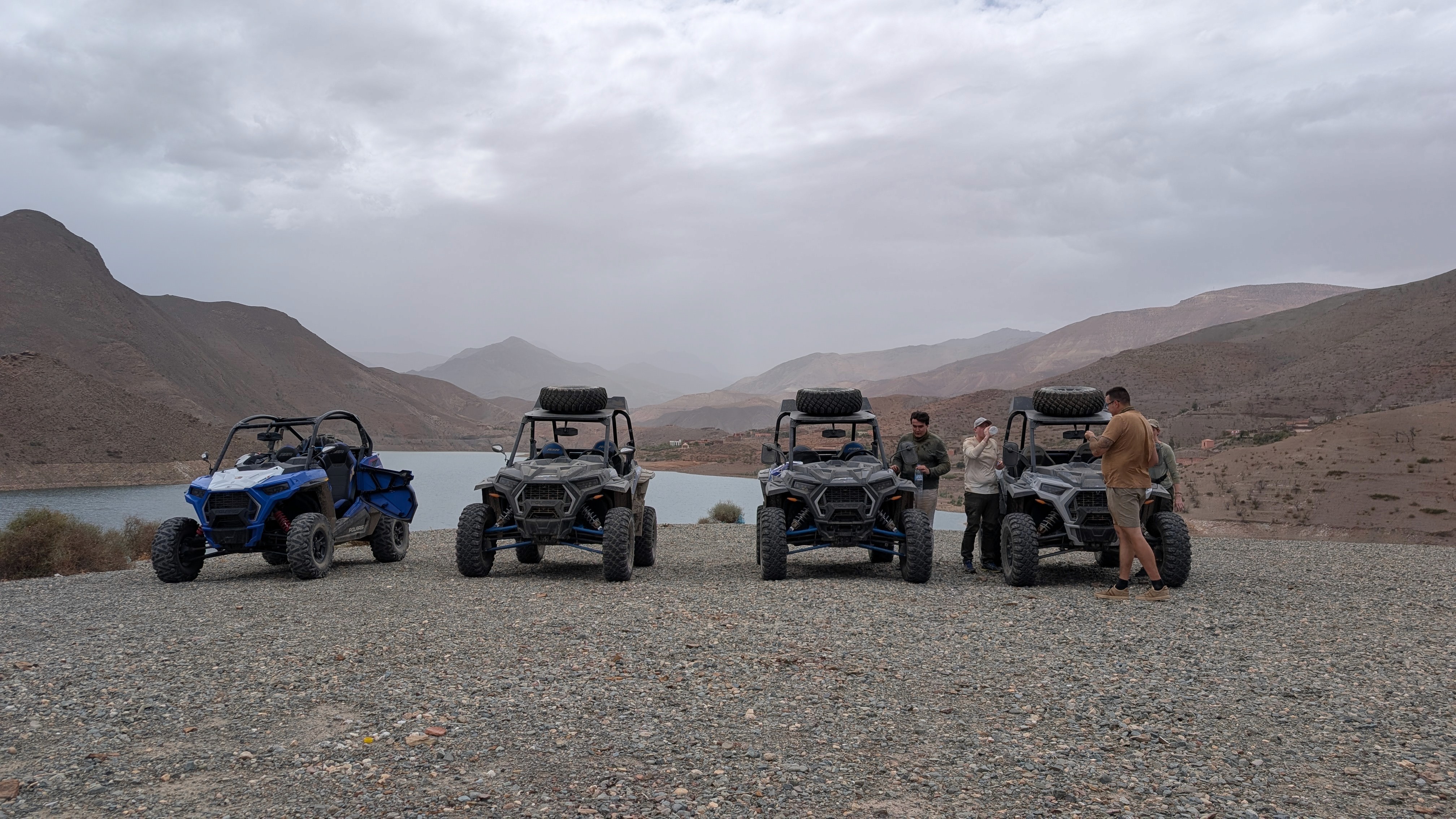
Now imagine eating it on the bonnet of a dusty buggy in the middle of a canyon where the nearest tablecloth is approximately 40 kilometres away.
It changes the flavour.
There is something deeply satisfying about placing something so rooted in tradition onto something built for movement. Steam rising into open air. Dust settling as you pass the bread. No menus, no background music, just wind negotiating with stone.
It feels slightly improper. Which makes it perfect.
The best meals are rarely the most formal ones. They are the ones earned by distance, by terrain, by mild dishevelment.
Tagine tastes particularly excellent when civilisation is technically optional.
4. See How Waterproof a Buggy Really Is
Mountain rivers have a charming way of looking shallow from a distance.
Up close, they become philosophical.
There is always a moment — mid-crossing — when the water rises higher than anticipated, someone says “It’ll be fine,” and everyone collectively decides to believe them.
Testing a buggy against a river is less about recklessness and more about curiosity. About trusting engineering. About discovering whether your definition of “waterproof” aligns with reality.
Occasionally, it does not.
That, too, is part of the story.
Emerging on the opposite bank — damp, triumphant, slightly re-evaluating your optimism — feels less like a stunt and more like a shared secret.
And yes, tractors exist for a reason.
5. Overestimate a Buggy in Snow
Snow in Morocco feels mildly unnecessary. Which is precisely why it’s delightful.
High in the Atlas, the landscape turns white and suddenly the desert narrative falters. Confidence, however, remains enthusiastic.
Overestimating a buggy in snow is a beautifully British form of humility. You approach with conviction. You advance with determination. You discover, quite swiftly, that physics has opinions.
There is laughter. There is digging. There are suggestions offered with great seriousness and questionable practicality.
And yet, there is also joy.
Because sliding, stalling and recalculating at altitude reminds you that adventure is not defined by perfection. It is defined by participation — and occasionally by shovels.
Snow was never on the postcard.
That makes it better.
6. Climb the Highest Passes of the High Atlas by Buggy
The High Atlas does not do modesty. It rises sharply, unapologetically, as though elevation were a personality trait.
Climbing its highest passes by buggy demands focus rather than bravado. The air thins. The road narrows. The views expand with unnerving generosity.
There is a particular concentration required when the mountain drops away on one side and leans in on the other. You are not conquering the Atlas so much as negotiating with it.
And yet, reaching the summit carries a quiet triumph.
Not theatrical. Not chest-beating.
Just the steady satisfaction of having earned altitude through attention.
From up there, Morocco rearranges itself into valleys, ridges and distances that feel both immense and precise.
The Atlas does not flatter you.
It simply allows you passage.
7. Get Gloriously Muddy with a Buggy
Mud has an excellent sense of humour.
It waits patiently for optimism, then rearranges it.
Getting gloriously muddy with a buggy is not elegant. It is not photogenic in the conventional sense. It is, however, deeply therapeutic.
There is something freeing about surrendering to splatter. About abandoning the illusion of composure as wheels spin, boots sink, and dignity becomes negotiable.
Adults are not often encouraged to embrace mess. Off-road terrain disagrees.
When the engine growls and the mud claims your tyres, you are left with two options: frustration or laughter.
The correct choice is obvious.
Emerging coated in earth feels less like failure and more like initiation.
Cleanliness can wait.
Joy rarely does.
8. Share a Forest with Barbary Macaques — by Buggy
The cedar forests of the Middle Atlas have their own hierarchy. You are not at the top of it.
Barbary macaques observe passing buggies with the calm scrutiny of seasoned locals assessing a mildly eccentric visitor. They are neither impressed nor alarmed. Merely curious.
Sharing a forest with them is not about spectacle. It is about restraint.
Engines quieten. Conversations soften. The moment stretches.
A macaque will look at you, tilt its head slightly, and appear to conclude that you are faintly absurd — a grown human navigating the woods in a mechanical contraption.
It is difficult to argue.
In that pause, you understand something simple: this is their landscape. You are merely passing through.
Which, in fairness, is a rather useful lesson.